
The Roundabout Entrepreneur
What does it mean to be roundabout and in what contexts can this strategy apply?
Lately, three materials have been filling my free time. These three materials have one theme tying them together, although ironically, for some of the materials, in a roundabout way. This theme is the idea of the roundabout as Mark Spitznagel calls it in The Dao of Capital.
The gospel of this book, which should be obvious by now, is the strategic advantage gained in the roundabout way
The Berkshire Hathaway Annual Letters
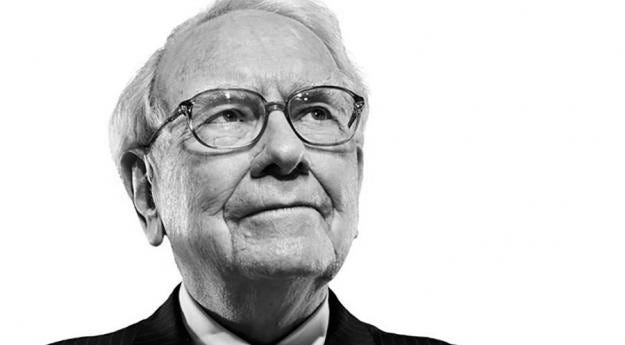
I spent the last few months reading every annual letter Warren Buffett wrote for Berkshire Hathaway going back to 1965. The reasons I did this were two-fold.
The first is that there is a lot of talk surrounding what Warren Buffett did, does, says, and said in investment circles, and I figured I’d get it straight from the horse’s mouth given how often his verbiage is quoted. I’d also been watching all the previous annual meetings that had been recorded on YouTube so I was already a follower and to some mild extent a practitioner.
While I’m on this point, I’ll mention that since reading his letters I’ve seen a great deal of misinformation spread from people who don’t know anything about Buffett’s approach. I often see things he stated in letters years ago taken out of context to support an investment thesis that Buffett would not approve of. As an aside, this is one of the most underrated advantages of learning. The more you learn, the more you realize how full of shit other people can be. Smelling bullshit is imperative to success, but I digress.
The second is, Warren Buffett is a legendary investor. It seems reasonable that if you want to achieve an even remote amount of his success, learning everything you can from him would be beneficial. As they say, “shoot for the moon, land on the stars”. This same approach is what led me to be accepted to the Berklee College of Music when trying to be accepted to Juilliard or to accept an offer from Amazon when trying to get into Google.
One of the important things you’ll uncover in these letters is Buffett’s patient, methodical, and disciplined approach to his early insurance business. Year after year in the early letters he states that other insurance businesses are chasing returns and that Berkshire’s insurance business will not write business that doesn’t make financial sense just because the other firms are doing it. Berkshire’s insurance business was more than willing to sit and do nothing for some years while in business.
It is our policy not to lay off people because of the large fluctuations in work load produced by such voluntary volume changes. We would rather have
some slack in the organization from time to time than keep
everyone terribly busy writing business on which we are going to
lose money.
Let that sync in, Buffett was willing to pay a staff of insurance personnel to do nothing all year if the business they would have been writing would not compensate them for the risks they were taking. Like most risk-based markets, Buffett knew that the insurance industry was cyclical and that the insurance businesses currently underwriting poor business and driving down margins for the rest of the market would go bust, the margins would then return to normal, and in some cases abnormal in the patient practitioner’s favor.
The Dao Of Capital
This idea of the roundabout investor was explicitly stated in Mark Spitznagel’s book The Dao of Capital. In it, he outlines the advantages of a roundabout strategy that can be found through history, from Coniferous trees to Laozi and Clausewitz. The idea here is that the most direct and obvious route to victory is seldom a route to victory at all. Laozi called it Shi vs. Li.
Simply stated, li goes for the immediate outcome of every battle, while shi seeks first the positional advantage of the setup.
Often the surest route to victory, surprisingly, is through indirect means and patience. This is similar to Buffett’s approach of letting the insurance business come to him when the time was right, rather than chasing future losses in a frenzy. Spitznagel would call this roundabout investing. When taking this approach it becomes imperative to understand the second and third-order effects of events, to capitalize on these indirect effects when the time comes.
The Indie Hackers Podcast
This leads me to the final set of material I’ve been consuming. I’ve been on a tear listening to every Indie Hacker’s Podcast I can get my hands on. I’m currently over 2/3rds of the way through all the podcast episodes and have learned an absurd amount from all of the entrepreneurs that have been on the podcast. However, the most topical to this post is the idea of what I’m calling the roundabout entrepreneur.
What has been most eye-opening to me about so many of these successful entrepreneurs is how long their businesses have been in operation in order to achieve the success they have. Prior to listening to the podcast, I was one of the sorry souls who thought you either had an overnight success viral mobile app or you had nothing, and since a few of my odd side projects hadn’t gone viral they weren’t worth pursuing further and were abandoned altogether.
Some of the entrepreneurs who’ve been on the podcast have made the off-hand comment similar to “yeah, we launched on product hunt and after the initial traction had to follow it up with content-marketing”. Courtland himself mentions a number of times that these one-off stunts usually don’t maintain growth and you typically can’t build a sustainable business around them.
To build a defensible sustainable business takes time, patience, determination, and discipline. If you are an overnight success, the chances are that you will not continue to be a success far into the future if you haven’t built the business chops to continue to operate correctly. Businesses take time (or capital) to grow. It’s as simple as that, and no amount of gimmicks or features is going to change that.
Once you accept that building a sustainable business takes time, and there isn’t anything you can do about that,* it becomes imperative to understand the second and third-order effects of events, to capitalize on these indirect effects when the time comes. Shi vs. Li. Because time is so important to the entrepreneurial process you have to be sure that what you’re working on has the ability to grow and be of worthwhile value far into the future and not just now. This is the idea of the roundabout entrepreneur.
*aside from diluting your equity, raising a round of funding, and throwing money at the business to speed the growth of course. However, if you haven’t steered the boat in a roundabout way, you may be steering it full steam ahead into a cliff.